On Jan. 24, 2026, Alex Pretti, a 37-year-old Minneapolis resident and intensive care nurse in the Minneapolis Veterans Affairs hospital, was fatally shot by U.S. Border Patrol agents.
A native of the Midwest, Pretti grew up in Green Bay, Wisconsin, where he was active in sports and community activities, including football, baseball and boy scouts. He also performed with the local choir while attending Preble High School.
After graduating from Preble High School, he went on to study biology and related fields at the University of Minnesota, graduating in 2011. With his degree he went on to pursue scientific research before he returned to school to obtain his nursing degree.
Colleagues and patients of Pretti remember him as compassionate and extremely committed to his work.
“He was extremely knowledgeable and caring,” said Mac Randolph, son of an Air Force veteran under Pretti’s care. “He answered all of our questions and treated our family with the utmost dignity and respect. He was truly one of the best of us.”

Outside of his work as a nurse Pretti has been described as an avid outdoorsman. He enjoyed adventures with his dog Joule, who had recently passed away prior to Pretti’s death.
Pretti’s mother said due to his immense care and adoration for the outdoors her son was extremely troubled about the direction the county was headed, especially the Trump administration’s rollback of environmental regulations.
“He was an outdoorsman. He took his dog everywhere he went. You know, he loved this country, but he hated what people were doing to it,” Susan Pretti, Alex Pretti’s mother said.
Family members also say he was deeply concerned about recent events in Minneapolis and had participated in protests following the Jan. 7 shooting of Renee Good, another individual killed by immigration authorities.
“He cared about people deeply and he was very upset with what was happening in Minneapolis and throughout the United States with ICE, as millions of other people are upset,” said Michael Pretti, Alex’s father.
Family members also emphasized that he had no criminal history aside from a few traffic tickets, held a lawful permit to carry a firearm and was motivated by concern for others rather than any intent to engage in any sort of violence.
Video evidence shows that approximately three minutes before the first gunshot, Alex Pretti was using his cellphone to document what appeared to be an immigration detention taking place nearby. As federal officers interacted with two unidentified individuals, Pretti continued holding his phone up toward them.
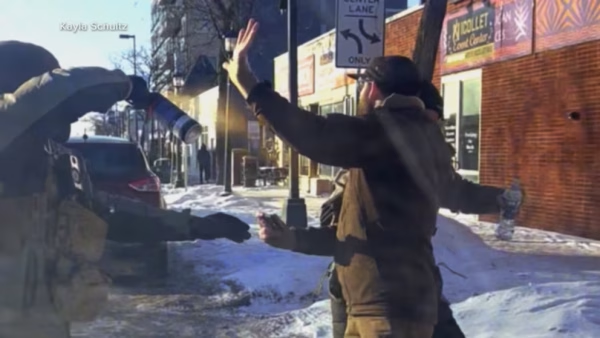
Footage recorded by bystanders captures an officer shoving one of the individuals to the ground. Pretti then moved toward the person and attempted to help them up. In response, the officer deployed pepper spray, striking Pretti and the two individuals. Pretti can be seen raising one hand toward the officer, appearing to place himself between the officer and the individual who had been pushed.
According to former acting DHS undersecretary and ABC News contributor Juliette Kayyem Cohen, Pretti’s gesture appeared consistent with an attempt to communicate that he posed no threat. Moments later, an officer grabbed Pretti by the hood of his coat and dragged him into the street.
Once there, video shows three officers pinning Pretti to the ground while additional agents formed a perimeter around him. Cohen stated that the officers’ actions did not appear to follow standard arrest or control procedures.
“It looked chaotic,” said Cohen. “There didn’t seem to be a clear tactical approach to restraining him.”
Several agents struggled with Pretti, forcing him to his knees. In the footage, Pretti appears to resist as officers seize his legs, press down on his back, and strike him multiple times.
Officers can then be seen removing what seems to be a firearm from Pretti’s waistband, consistent with a handgun authorities later said he possessed.
At 9:01 a.m., the first shot was fired by an Immigration officer. Within five seconds, at least 9 more shots were fired, leaving Pretti lifeless on the ground.
Shortly after the shooting, the Department of Homeland Security issued a statement defending the officers’ actions, asserting that Pretti had approached agents with a 9-millimeter handgun and violently resisted efforts to disarm him. The statement did not clarify whether the weapon was in Pretti’s hands or simply on his person.
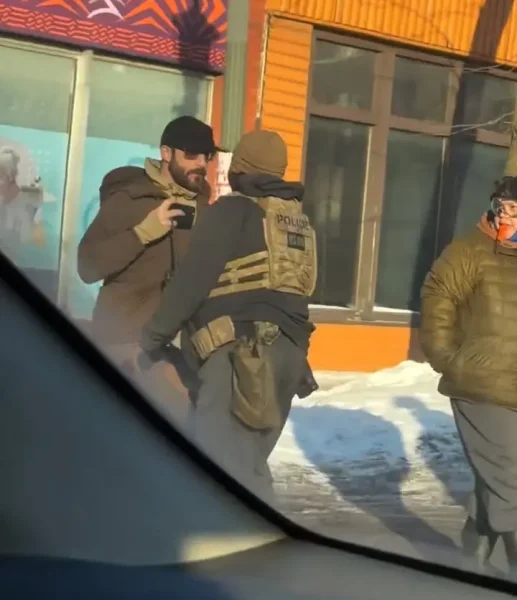
However, videos captured by multiple witnesses and later verified by The New York Times appear to directly contradict DHS’s account. In every verified recording prior to the shooting, Pretti is seen clearly holding a phone, not a gun, before the agents took him to the ground and shot him.
The following day, Minneapolis residents gathered at the site of the shooting, braving the freezing temperatures to hold a vigil where they left flowers and honored Pretti’s life.
Outrage over his death spread quickly throughout the state, along with demands for accountability from federal authorities.
Shock and upset over Pretti’s death has seemingly extended beyond Minnesota. Protests have taken place all across Wisconsin, with hundreds to thousands of demonstrators marching in cities including Green Bay, Appleton, Fond du Lac, Madison, Milwaukee and Oshkosh, condemning ICE enforcement practices and honoring Pretti’s life.
Demonstrations have since been reported across the United States and internationally, with solidarity rallies and vigils reflecting broader concerns about immigration enforcement, police accountability and the use of lethal force by federal agents.
Alex Pretti is remembered by loved ones as a dedicated nurse, an outdoors enthusiast, and someone who believed deeply in standing up for others.
“Alex wanted to make a difference in this world,” his parents said. “Unfortunately, he won’t be here to see the impact he’s made.”