
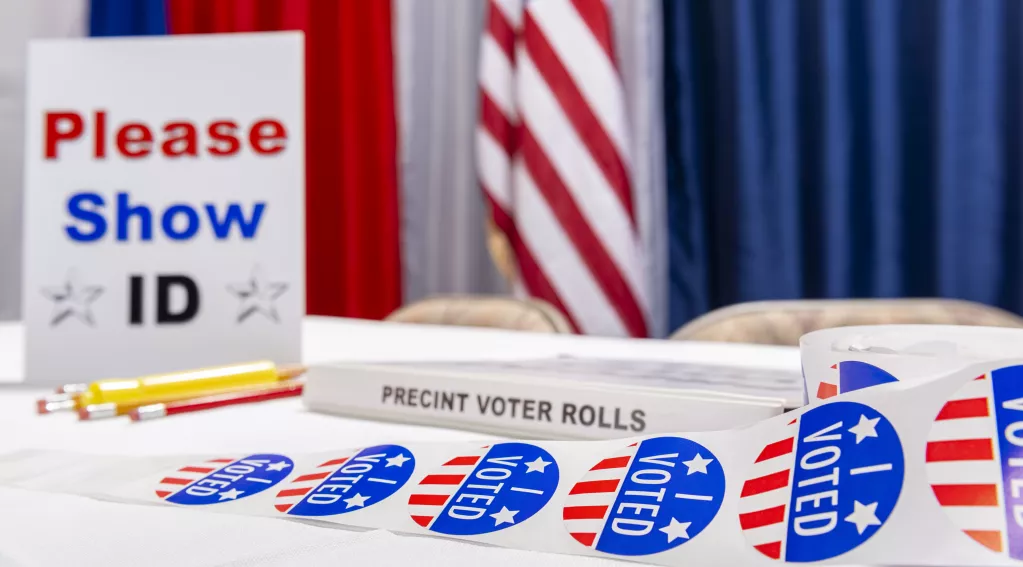
Making its way back to Congress and drawing national attention, the Safeguard American Voter Eligibility (SAVE) Act has sparked conversation on both sides of the aisle. After passing in the House once again, the bill is headed toward the Senate for another vote.
While it is not the first time the legislation has made its way to the Senate floor, the timing of this vote is undeniably significant. As midterms loom around the corner and control of the Republican-led Senate remains uncertain, the outcome could shape the bill’s future.
Originally introduced by Rep. Chip Roy, R-Texas, the SAVE Act continues to spark debate, but many Americans remain unclear on what the legislation would actually do if passed. So, what is the SAVE Act?
First introduced in January 2025, the SAVE Act aims to require documented proof of U.S. citizenship when registering to vote in federal elections. If passed, the act would require voters to provide their birth certificate, naturalization certificate or adoption decree alongside their government-issued photo ID. Other forms of acceptable ID include a U.S. passport, valid military ID and forms of tribal identification.
These requirements are designed to prevent undocumented immigrants from casting votes in U.S. elections. It is illegal for noncitizens to vote in the U.S. and many states, including Wisconsin, have additional requirements in place to further prevent noncitizens from voting.
Last year, Wisconsin voters approved a constitutional amendment to enshrine the state’s existing photo ID requirement for voting into the state constitution. Other states have similar requirements in place, including providing a Social Security number when registering to vote and matching voter rolls to federal data. Currently, citizens can register to vote by providing their government-issued ID and the last four digits of their Social Security number.
While the SAVE Act is designed to strengthen election integrity, some politicians worry it crosses the line of voter discrimination.
According to a study by the Brennan Center, 21.3 million American citizens of voting age do not have documents like these readily available. The study also indicates that 3.8 million Americans do not have some of these documents at all, often because they have been lost, destroyed or stolen.
Many Americans, especially low-income individuals, people of color, married and divorced women would be particularly affected by the SAVE Act. Obtaining the documents needed to register under the SAVE Act have additional fees, such as the $130 cost to buy a passport.
These fees would disproportionately affect people of color. Two-thirds of Black Americans lack a valid U.S. passport, and passport ownership decreases with income. Elderly Americans are also less likely to have a valid passport, which could affect older voters in rural communities.
Passports are not the only form of identification that could create obstacles to voting. Because married women often change their last name, it may no longer match the name listed on their birth certificate, creating an additional barrier for registration. Adoptees and transgender individuals who have legally changed their name could also face similar discrepancies between documents.
Not only would the SAVE Act impact those various groups, but college campuses would also see a direct impact. Since many students do not have documents such as their birth certificate on hand when at college, registering to vote locally could become more challenging under the SAVE Act.
Students may need to register in person at a government office, requiring them to find transportation off-campus to register. The bill would also require proof of citizenship when requesting an absentee ballot, which may prove difficult for students wanting to cast a ballot for their hometown elections.
Public universities are currently required to provide students with help registering to vote under the Higher Education Act. UWL fulfills this responsibility through the on-campus group, UWL Votes.
UWL Votes hosts various voter registration drives, which would become more difficult under the SAVE Act. Efforts like these would have to be restructured if the SAVE Act passes for college campuses across the nation.
The Republican Party has stressed the importance of election security since Donald Trump lost the popular vote in the 2016 and 2020 presidential elections. Trump has since claimed he lost due to fraudulent votes cast by a large number of noncitizens casting ballots.
According to a Washington Post analysis of the conservative Heritage Foundation’s database of voter fraud, 85 cases of noncitizen voting were brought forward by prosecutors over a two-decade period from 2002 to 2023.
There are few cases of noncitizens voting because of the existing safeguards designed to maintain election integrity. States are legally required to maintain voter rolls because of the National Voter Registration Act of 1993. This process removes ineligible voters, often those who have died or moved addresses.
During this process, states flag noncitizens who may have been illegally added to the voter rolls. The SAVE Act would further these efforts, as registering to vote would prove difficult for anyone without proof of U.S. citizenship.
The SAVE Act is expected to make its way to the Senate floor sometime this week. If passed, the legislation would surely affect voter registration procedures nationwide, including the UWL campus.









John T • Mar 2, 2026 at 8:10 am
It’s interesting you’ll reference data on the cost of passports and what percentage of US individuals don’t own one, but seem to leave out Birth Certificate data. Yes, while roughly only 34% of Black Americans own a passport, the vast majority have a copy of their Birth Certificate. A 2006 congressional report (Introductory Statement on S. 2305; Congressional Record Vol. 152, No. 20) found that only 9% of Black Americans did not have a copy of their birth certificate on hand. In terms of getting a new one, they cost $20 in the state of Wisconsin and are easy to replace. If you’re missing you’re birth certificate AND your photo ID (now we’re talking a very small number of people), it costs $16 to replace you’re ID in Wisconsin.
Like Ken mentioned, this is no longer a bipartisan issue. We want to protect elections, this is the first step in doing so.
Ken Bell • Feb 24, 2026 at 8:04 pm
85% of Americans favor passage of the SAVE Act, so welcome to the 15%.
I find it difficult to believe that students never produced documents to apply for student loans, student aid, Food Stamps, or obtain a Social Security card. Isn’t it racist to denigrate the low-income or minority population isn’t capable enough to know how to get an ID? What women do you know who are not smart enough to change their name after marriage? Why would students want to vote as temporary residents of their college community rather than at home, where their family’s tax dollars for education are paid? 21.3 million Americans don’t have documents “readily available.” My goodness, federal elections are at best every 24 months… how much time does one need? Most people buy things using credit, and don’t balk at providing their information. I may not be be 100% correct in all of my opinions, but I’m closer to the vast majority of Americans who find these arguments not credible. Wisconsin voters are right, and it’s time to respect the two-thirds of them who want voter ID.
marylandtimetraveler • Feb 24, 2026 at 1:30 pm
If Republicans put forth better policies, maybe they wouldn’t be so scared of having the most people vote. To create a solution for a problem that is almost non-existant seems liek an overkill. And as a woman, I’m insulted by their obvious desire to prevent me from voting.