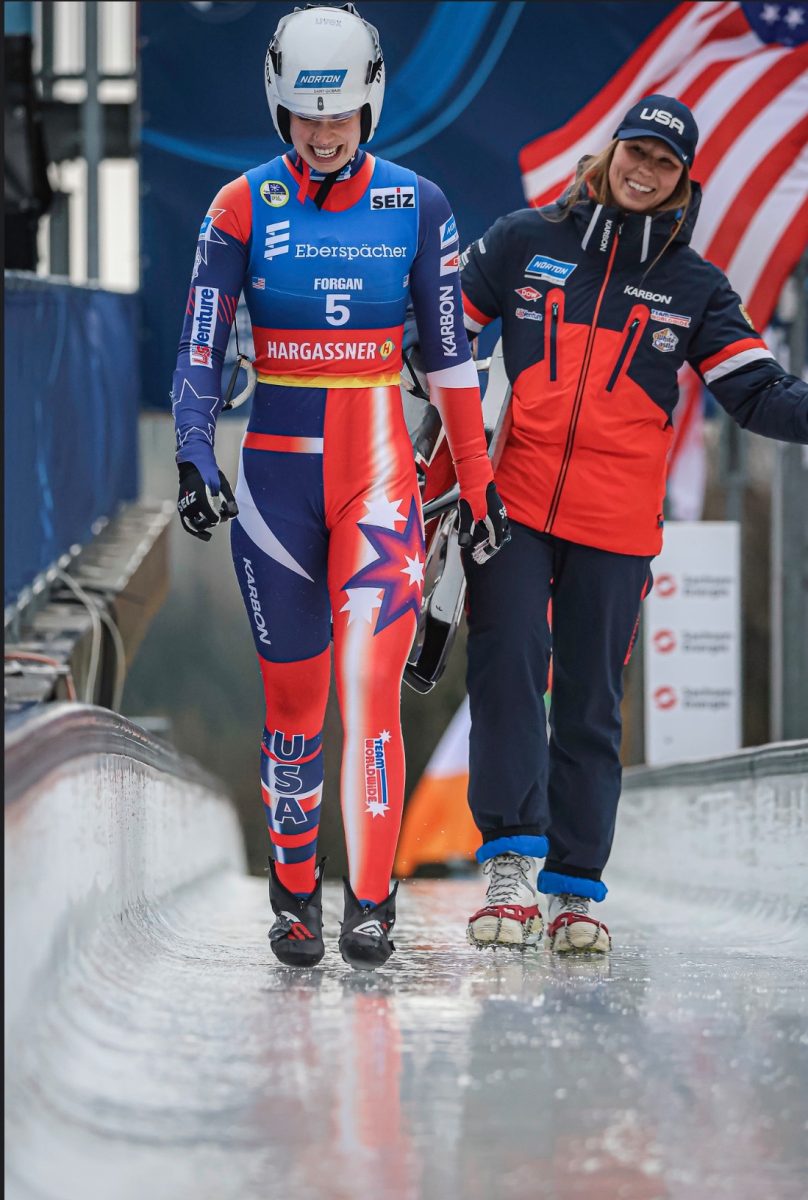
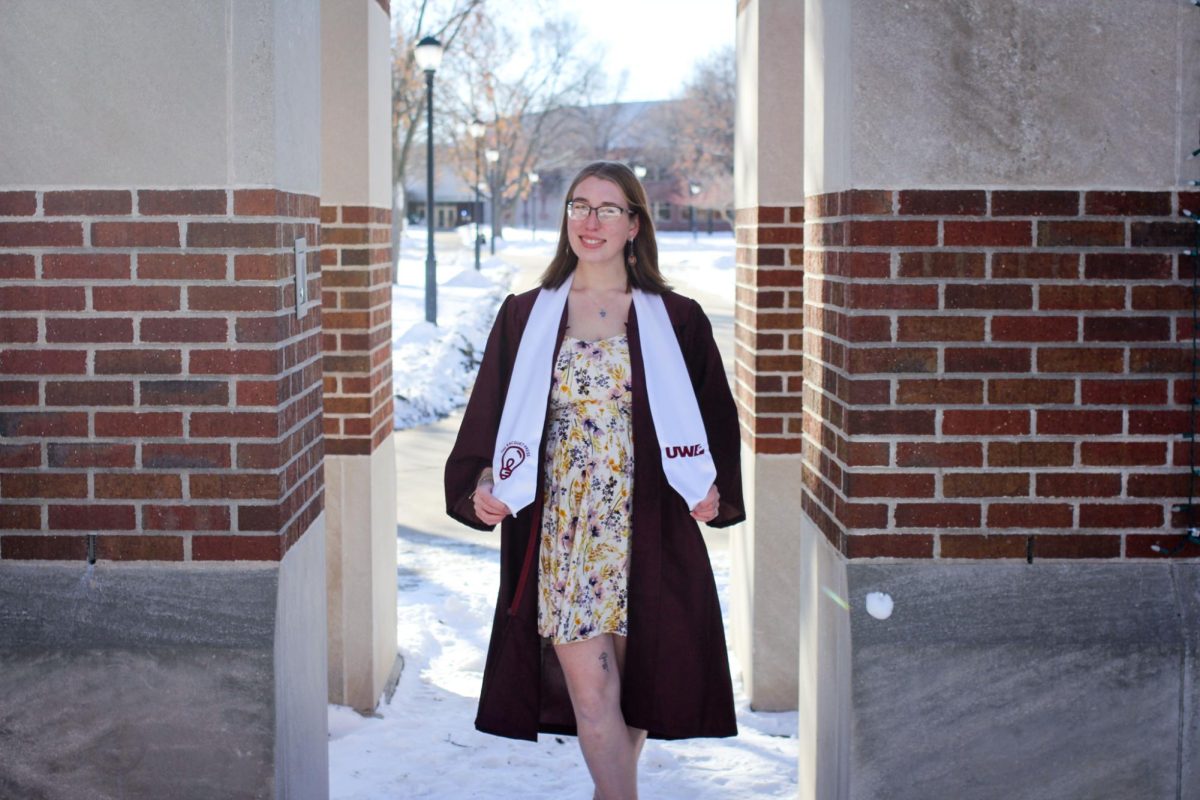
University of Wisconsin-La Crosse alum Caroline Kannel graduated in 2016 with a Bachelor of Science in athletic training and a minor in psychology. She has since led a career as an athletic trainer, with her most recent accomplishment of serving as the athletic trainer for the USA Olympic Luge team for the past four years.
Kannel began her academic career at Western Technical College, where she completed her general education requirements and played collegiate volleyball. After finishing her general education coursework in her first year, she transferred to UWL and entered the university’s athletic training program.
Raised in La Crosse, Kannel said she knew from a young age that she wanted to attend UWL.
“Being a local kid and growing up here, UWL was always in my world,” Kannel said. “It was always something I was really excited about, and I really wanted to go there, even as a kid.”
Her interest in athletic training developed during her junior year at Holmen High School. As a three-sport athlete, Kannel spent significant time working with her athletic trainer, also a UWL graduate, who helped solidify her career aspirations. She credits her high school trainer with affirming her decision to pursue both athletic training and UWL.
While attending Western Technical College, Kannel returned to Holmen to shadow her former trainer, further strengthening her commitment to the profession.
Reflecting on her decision to pursue athletic training, Kannel said the choice ultimately came down to combining her two passions.
“Everything I kept coming back to was that I really enjoy helping people, and I love sports, so why can’t I do both at the same time?” she said.
During her time in UWL’s athletic training program, Kannel worked a majority of campus sporting events, gaining exposure to a wide range of injuries and high-pressure situations. She said the hands-on learning experience she had during her time here was invaluable.
“I credit UWL with so much of what I learned and how I became the person I am today,” Kannel said.
She attributes much of her academic success to her professors, coursework and hands-on experiences, but said what truly prepared her the most for the career she has now was navigating through personal challenges and learning from her own mistakes.
“It’s honestly how you recover and how you bounce back from those mistakes that make you so resilient,” she said.
Looking back on her time at UWL, Kannel speaks with deep appreciation for both her educational and personal growth.
“It was amazing,” she said. “There are so many things that I know now that when people ask me if I could go back in time and change anything, I wouldn’t. I loved my experience, my professors were fantastic, the people that I met, the friends that I have made, and the athletic training program. It hands down put me exactly where I am today.”
After graduating from UWL, Kannel continued her education at PennWest California, where she studied from December 2017 to May 2019. During her time there, she earned a dual master’s degree in performance enhancement and rehabilitative sciences.
She then began her professional career at Wingate University, spending two years as an intern athletic trainer. Kannel later accepted a position at Queens University of Charlotte, where she worked for four years providing athletic training services.
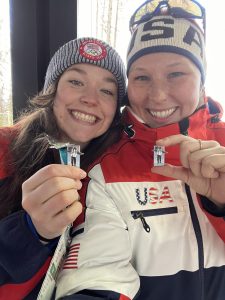
As an athletic trainer, Kannel serves on the front lines when injuries occur. Her responsibilities include emergency response, acute care, injury recovery and long-term rehabilitation planning.
“Sometimes I explain it to people like, you know a physical therapist, you know an occupational therapist, you know an ER doctor, well, I’m all of those things wrapped into one,” Kannel said.
Toward the end of her time at Queens University of Charlotte, Kannel felt ready for a new challenge, but she wasn’t exactly certain what that next step would look like.
While she knew it was time for change, the possibility of working at the Olympic level had never even crossed her mind.
Kannel describes her path to the Olympics as unplanned and unconventional. The idea was first planted by her roommate at Queens University of Charlotte, who mentioned an opening with Team USA.
Curious to know more, Kannel visited the Olympic career page and found positions available in both bobsled skeleton and luge. After reviewing the qualifications, she decided to apply. Although at the time she believed a position at that level was out of reach, she would soon spend the next four years of her life living that dream.
“At the time, I had been living in Charlotte for seven years, so I had gotten very used to no snow, and while I was filling out the application, there was a physical box I had to check that said, ‘Yes, I am willing to relocate to either Colorado Springs, Colorado, or Lake Placid, New York.’ And my first thought was, ‘Oh my God, both of those places are freezing,’” she said. “But I just clicked the box because I was thinking, ‘I’m not going to get this position anyway.’ Click. Moving on. I thought, ‘I’ll just throw my hat in the ring and see what happens.’”
Two weeks later, while on a backpacking trip with friends, she received an email from Team USA’s human resources department requesting an interview.
Despite advancing to the first round, Kannel left the interview feeling discouraged.
“I thought I botched it,” she said.
Shortly after, she was asked to submit a written statement explaining what set her apart from other candidates and to design a hypothetical luge training regimen.
“I was like, ‘I don’t know what did set me apart?’” she reflected. “I just think that I am a routine AT, I’m a goofball and I like to have fun, so all of those things make me think ‘Why did you pick me,’ but all of those things are why they picked me. Like I have a personality to be able to talk with people, to make people laugh, to bring joy to the room but I also know when it’s time to be serious, and I know how to do my job seriously and I care extremely about taking care of my athletes.”
After submitting her five-page paper, she was invited to continue in the interview process. She completed another virtual interview before being flown to Lake Placid for an on-site visit. A week later, she received an offer to join Team USA as the athletic trainer for the luge team.
Kannel began her four-year tenure as the athletic trainer for Team USA’s luge program based in Lake Placid. During that time, she split her schedule between domestic training and international competition, spending approximately six months training and competing in Europe.
Her days were structured around the team’s two-hour training sessions, which times varied daily. During these sessions the U.S. athletes typically practiced alongside another national team of about 15 sleds, often Slovakia or Latvia. While the training block was the focal point of the day, much of Kannel’s work occurred outside of those on-ice sessions.
Most mornings and evenings were dedicated to athlete treatment, recovery protocols and rehabilitation work. During training runs themselves, however, her role was often more observational.
“During training sessions is when they usually need me the least. At the Olympic level, these athletes are so well-versed in their craft that crashes are pretty minimal. So typically during training, I’m reading a book,” she said.
Though emergencies were rare, she remained prepared to respond at a moment’s notice.
While luge is often associated with high-speed crashes, Kannel said the most common injuries she treats are in fact not catastrophic, but chronic. Shoulder overuse injuries are the most prevalent injury among luge athletes. This is due to the seated start, where competitors use powerful paddling motions to propel themselves onto the track. The repetitive force places significant strain on the upper extremities, particularly the shoulders.
Kannel’s background in overhead sports prepared her for that specific demand. As a former volleyball player, she has extensive experience working with overhead athletes. She also previously served as an athletic trainer for wrestling, rugby and softball experiences she credits as particularly formative.
“Honestly, I would say working with wrestling and rugby probably prepared me the most to be, A: an Olympic athletic trainer and B: a luge athletic trainer,” she said. “You take the insane, quick ‘anything can happen’ mentality of those two sports and apply that to a person or two people on a tiny sled going down a frozen waterslide at 70 to 90 miles an hour.”
Kannel continued, “You have to be ready for anything to happen, and I was ready in that regard because I had worked in sports where anything can happen in the blink of an eye.”
Though her role as an Olympic athletic trainer has been incredibly rewarding, spending six months training and competing abroad is an experience she described as both extraordinary and exhausting.
“Spending six months abroad sounds really cool, but it’s also exhausting. It’s hard to be away from home for that long. I’ve seen a lot of really awesome things. I’ve done a lot of really crazy things that people would never really expect,” she said.
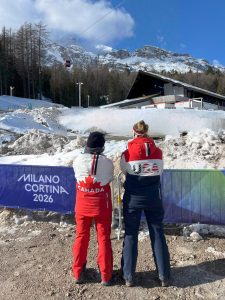
What kept her going during long stretches away from home was her support system of friends and family, as well as the community she made on the road, including a strong friendship with the athletic trainer for Canada’s Olympic team. Above all, she said, her passion for the profession kept her motivated.
“I hate being stagnant. I don’t want to get stuck into a routine that is monotonous and boring, I love the adventure, I love the excitement and that’s why I really love being an athletic trainer,” she said.
She expanded further on her love for athletic training when asked about the most rewarding part of her work. “I’ll probably tear up talking about this because it’s something I feel so passionate about. It truly is seeing the athletes coming back after injury to do what they love to do,” she said.
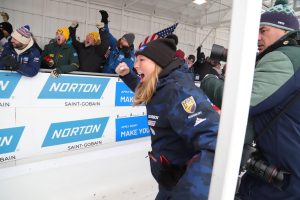
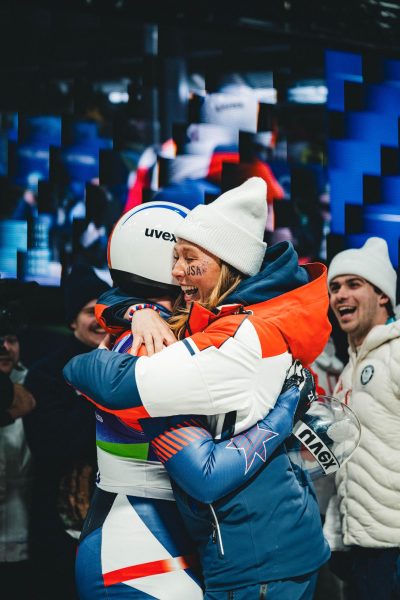
Some of her fondest memories during her time at the Olympics were what she saw while traveling and the people she got to meet, but above all what stood out as a core memory for her was watching a female luge athlete she had worked closely with after battling injuries return to competition and win a bronze medal for Team USA.
As she reflects on her journey, Kannel offers advice to aspiring athletic trainers that she would tell her younger self: develop resilience and trust your impact.
“There will be so many haters, and you have to be able to block them out and do it with a certain amount of grace,” she said. “You have to hear the feedback people are giving you, but at the same time know that what you’re doing is making a difference. You can’t take it personally. You can’t see every setback as a major failure; you have to learn from it. And don’t be afraid to reach out to your support system.”
With the Olympic cycle coming to a close, her long-term plans remain up in the air.
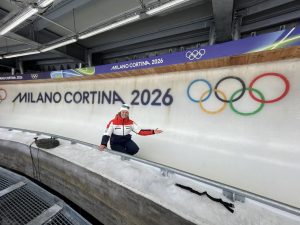
“It’s not that I’m necessarily moving on or looking for something different, but it’s a fact of, do I want to keep doing this? Or do I want to transition? I could stay with USA Luge and go another four years, the next Winter Olympics are in France, which would be really fun. Or I could pivot totally. I could move back to Wisconsin. I could look for a job closer to home,” she said.
That versatility, she said, is one of the greatest strengths of athletic training.
“Athletic training is so versatile, and I love that about this profession,” she said. “I could work in a clinic, for a surgeon, at a high school, at a university, for a pro sports team or for the Olympics.”
For now, her short-term goal is to participate in a medical volunteer trip abroad, providing care in underserved communities.
“I love volunteering, I love being out in the community and helping wherever my efforts are needed. I just want to help,” she said.