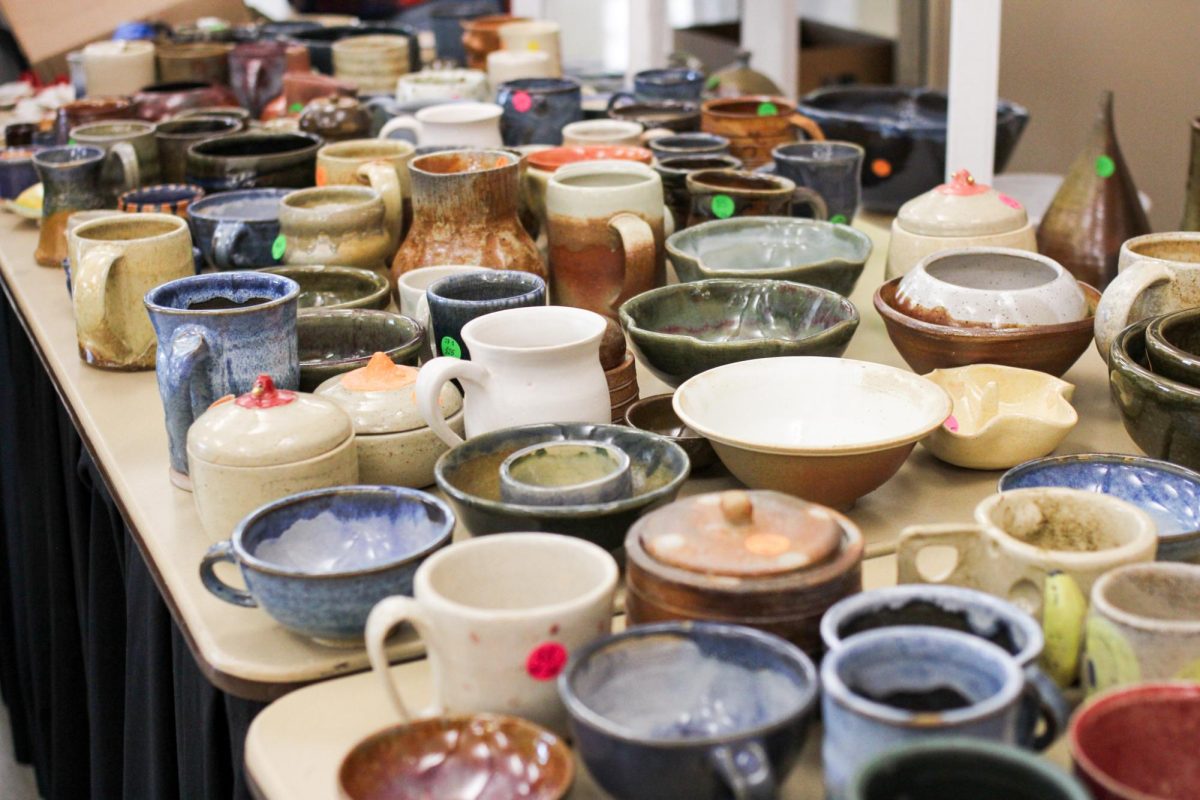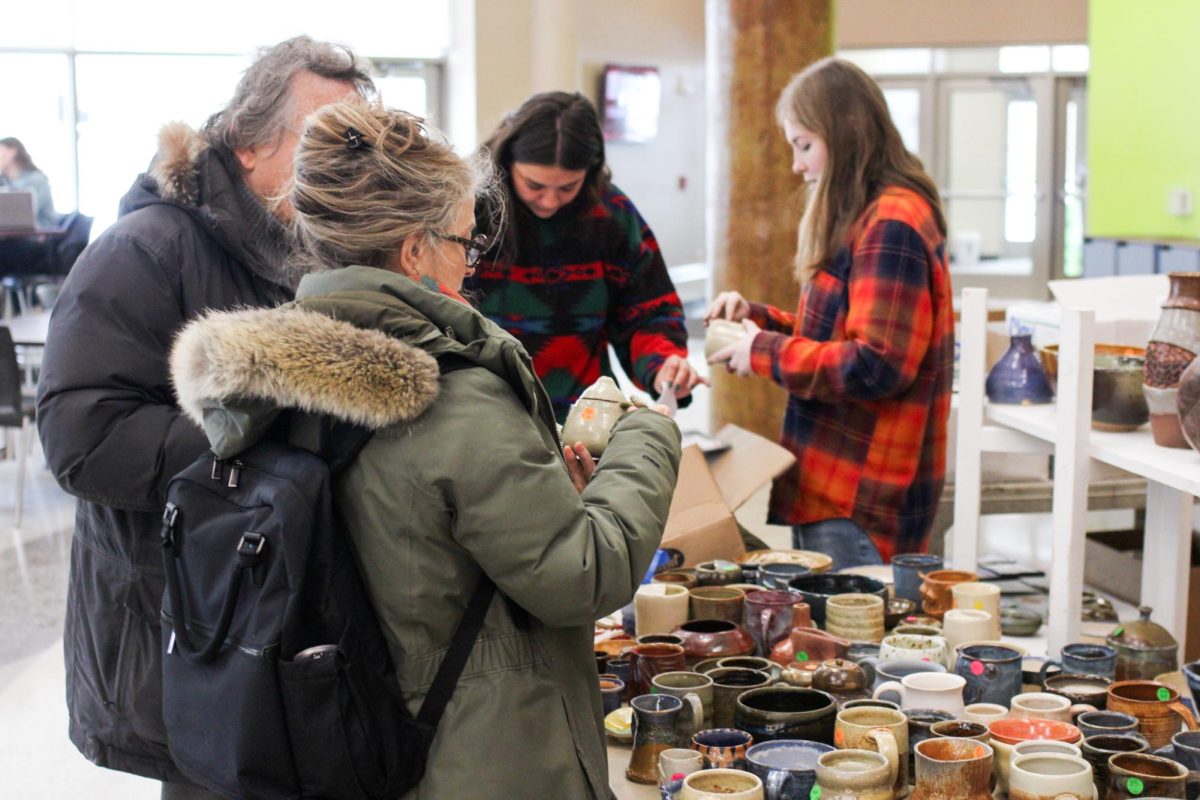
Every semester, students in the University of Wisconsin-La Crosse art department are creating new and unique artworks. The biannual ceramics sale hosted by the UWL ceramics club is a great way to see what art students have been working on and even take home a special piece of artwork for yourself.
The sale will be running from 10 a.m. to 4 p.m. on Tuesday, Dec. 9, 2025 and Wednesday, Dec. 10, 2025 outside of Sono in the Student Union.
Mugs, bowls, vases, teapots and more are available to purchase and while a portion of the funds from the sale go towards the UWL ceramics club, the rest go to the student artists themselves.
Isabella Holtrop, president of the UWL ceramics club, said, “I was a part of the sale last year, and it was such a great experience. You make way more money than you think and people buy your stuff even if you don’t think they’re going to buy your stuff.”
Many students have never sold artwork before participating in the ceramics sale, and as emerging artists, this is a new and valuable experience for them.
A large part of the preparation for the sale is discussing how to price the artwork. Ceramics professor, Jarred Pfeiffer, guides students through the process of how to fairly and effectively price their work. A lot of time and effort goes into each handmade piece, and students are encouraged to value their work.
“It’s handmade. You spent a long time making it, and that goes into the price. You price it higher, and people actually start buying it, and it feels really good to know that people will spend the money to buy your work,” said Holtrop.
A lot goes into the process of making a ceramic piece. For example, a mug begins as a clump of clay that must be wedged to rid the clay of any air bubbles. Then the artist preps their potter’s wheel and throws the mug, or forms the mug’s shape out of the clay.
The mug is trimmed, which helps refine the shape, and then it is left to dry for a day or more before a handle can be attached. Once the handle is made and attached to the mug, it is fired in the kiln for the first time. The process of firing a kiln can take between 24 to 48 hours.
After the mug is fired, it must be glazed, and then it is fired again. Once it comes out of the kiln for the second time, the final piece can be refined, which fixes any imperfections or glaze drips on the piece. Overall, the process of making a mug can be a week or two long.
Holtrop mentioned that this is very different from a commercial setting where hundreds of mugs can be produced in a day or less, but that individual artmaking is important because people need a way to express themselves.
“I think we get caught up in going to Target and buying the perfect set of bowls, but they don’t have the fingerprints, the trimming marks on the bottom or the signature. I think it’s important to keep that character in all of the stuff that we have,” Holtrop said.
Each piece of art is unique and handcrafted by the artist, and that is what makes them so special. The ceramics sale is a great way to support student artists and also a good place to buy unique gifts for the holidays.
“It’s great to have this support because it means we can keep making stuff,” Holtrop said. “Thinking about people using your mug to drink their morning coffee every morning, I just love it. I love the way it makes me feel.”