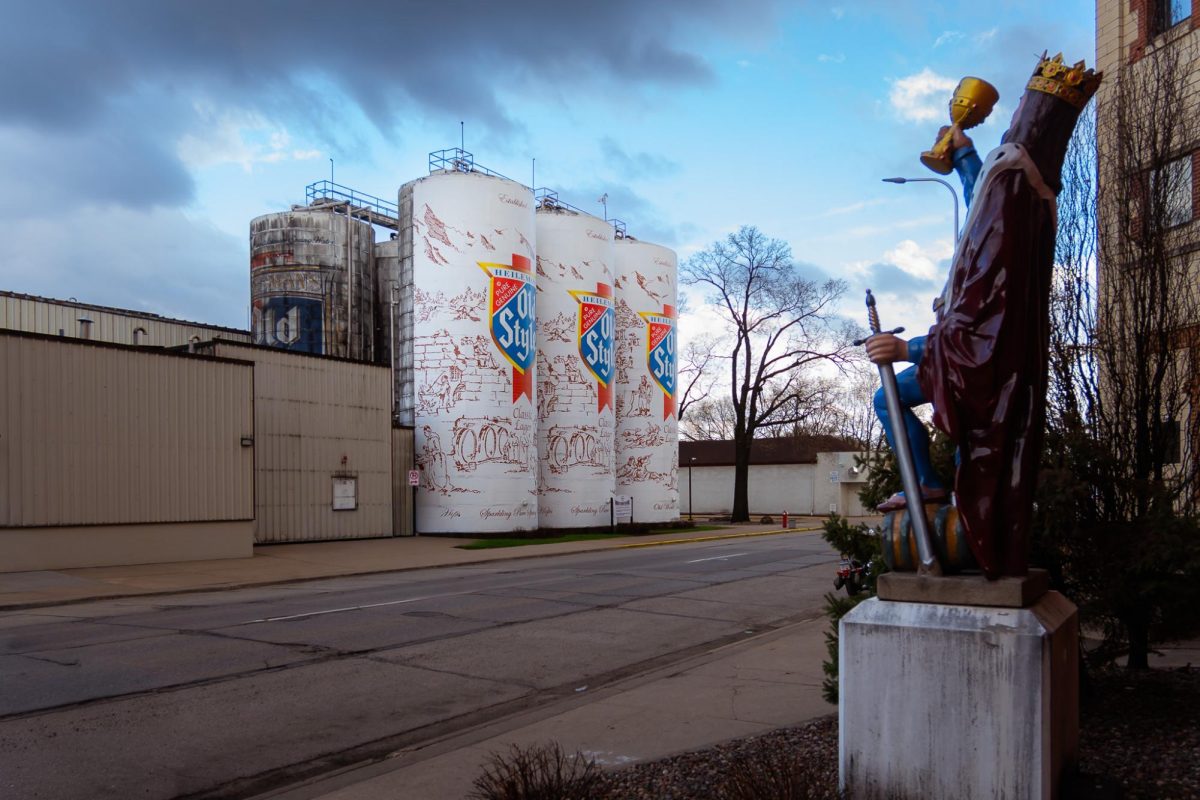
Wisconsin is known for its drinking culture, but few cities embrace that identity more than La Crosse. From its annual celebration of Oktoberfest to its busy bar scene, the city is also home to the world’s largest six-pack.
For college students and long-time residents, the six massive storage tanks have become a well-known site for everyone who lives in the area.
“I remember growing up in La Crosse; the world’s largest six-pack was always one of the spots we’d take people to see,” Maddie Herlitzka said. “It’s an iconic location, just a short drive from what used to be the most bars per capita on one street.”
The tanks were originally built in 1969 by the G. Heileman Brewing Company. Each tank holds more than 600,000 gallons, which means that all six tanks hold over four million gallons at any given time.
In 1976, the tanks were painted to resemble Old Style beer cans as a marketing effort. They gradually gained attention and became known as the world’s largest six-pack by the early 1980s.
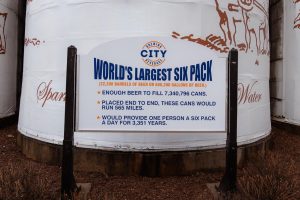
For many students at the University of Wisconsin-La Crosse, the six-pack is one of the first landmarks they notice when arriving in the city.
“When I first saw the infamous La Crosse landmark, I was struck by the amount of history in the
Driftless Region — from its geology to its food and beverage industries,” Charlie Szohr, a recent UWL graduate, said. “Old Style is a staple throughout Wisconsin, but its roots start here in La Crosse.”
The six-pack also reflects the city’s long-standing connection to the brewing industry, which has played a major role in the local economy.
Nearby, a statue of Gambrinus, known as the “King of Beer,” is also a relevant landmark that is often associated with the tanks. The 15-foot statue was purchased by the G. Heileman Brewing Company in 1939 from a closed brewery in New Orleans.

Gambrinus comes from European folklore and has long been linked to beer and brewing, making him a common symbol for breweries in both Europe and the United States.
Though the function of the tanks has stayed the same over the years, their appearance has taken on a new meaning. Whether viewed as brewery storage or a tourist attraction, the world’s largest six-pack remains a part of La Crosse’s rich history.