Cass Street in La Crosse is home to some of the city’s most significant houses. The size and beauty of the homes built there have drawn much attention over the years. One such house is an example of the area’s rich history of early 1900s architecture.
Built in 1897, the W.W. Withee House was constructed by James Sturman for lumber baron W.W. Withee at the height of La Crosse’s lumber boom. Withee, who served as president of Security Savings Bank, commissioned the home to display his wealth and status.
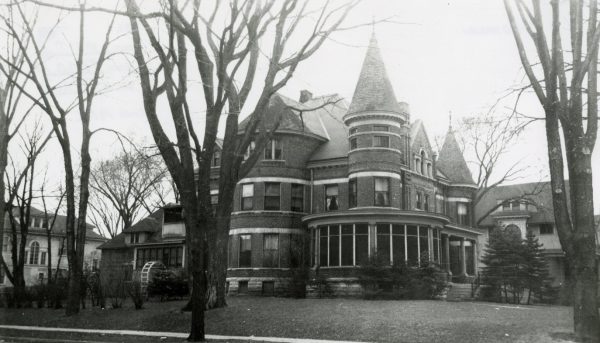
Designed in the Queen Anne style by architects Gustav Stoltze and Hugo Schick, the house has drawn comparisons to a castle due to its two rounded towers that look down on Cass Street.
A carriage house was also constructed alongside the property, where servants who took care of Withee’s horses likely had living quarters on the second floor. Inside the main residence, the basement once featured a private bowling alley. At the time, bowling was still a novelty, which made the alley a popular place to host parties. The bowling alley has since been restored and renovated, helping preserve the original character of the house.
More than 125 years after its construction, the W.W. Withee House no longer belongs to one family but is rented to the public of La Crosse.
At some point during the 20th century, the home was divided into apartments, which was common among these lumber-era mansions. The cost of maintaining such large properties made single-family ownership difficult, and many similar homes were either subdivided or eventually torn down.
This three-story house offers a mix of long-term renting and short-term Airbnb units. The main residence is home to four long-term renters who share the historic space. For them, living in a house built in 1897 has taken some time to adjust.
For Samuel Baudek, the scale of the home was the first thing that stood out.
“The ceilings were so high, the door frames were so wide—everything just felt so grand,” Baudek said.
While living in a historic home has its benefits, it also comes with drawbacks. When asked about inconveniences, Danny Wessberg didn’t hesitate.
“Heat and cooling,” Wessberg said. “That’s definitely a big one.”
The house operates on radiator heat, which gives tenants little control over when it turns on or off. The house does not have central air conditioning, and many of the original windows do not open, which can make for warm summers.
Hayden Schmidt, a part owner of the property, said the home’s history drew him and his business partners to the investment.
“It is one of those properties that people in La Crosse recognize right away,” Hayden said. “The W.W. Withee House has a lot of local history and character, and that’s what drew us to it.”
Besides the house’s history, the property layout fit within their business goals.
“We’ve always wanted to own one of the historic homes like this,” Hayden said. “But what really made this one the right fit was that it’s a five-unit multifamily property, which aligns with the type of properties we focus on.”
Though Schmidt said the scale that impresses people also comes with a lot of responsibility.
“I still remember the first time we walked through the house—we were amazed by the size, craftsmanship and overall presence,” he said. “At the same time, it’s a bit of a tank to maintain. The amount of upkeep is comparable to managing a 24-unit apartment building.”
Over the course of its long history, the W.W. Withee House has seen many residents come and go. Through the years, this historic building has continued to stand the test of time as a home to many.
“I hope the people who live here always care,” Baudek said. “It’s not just a house. It’s a piece of history.”