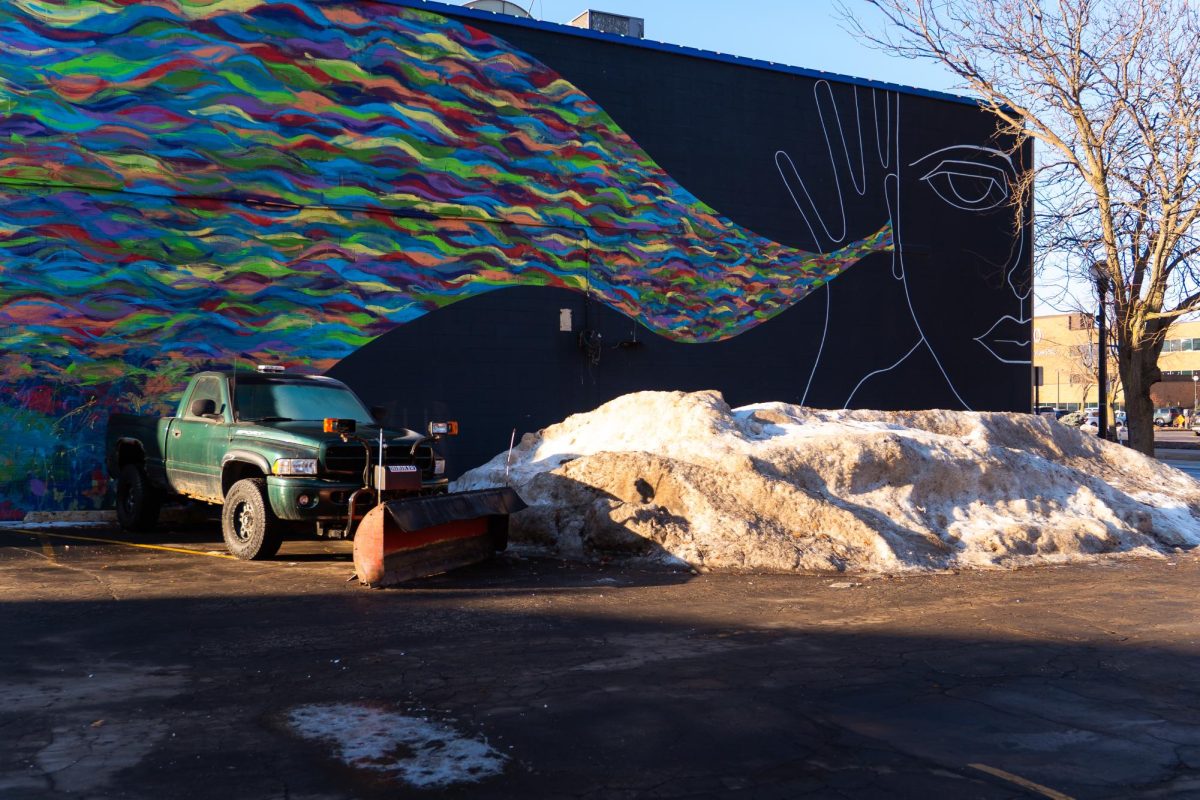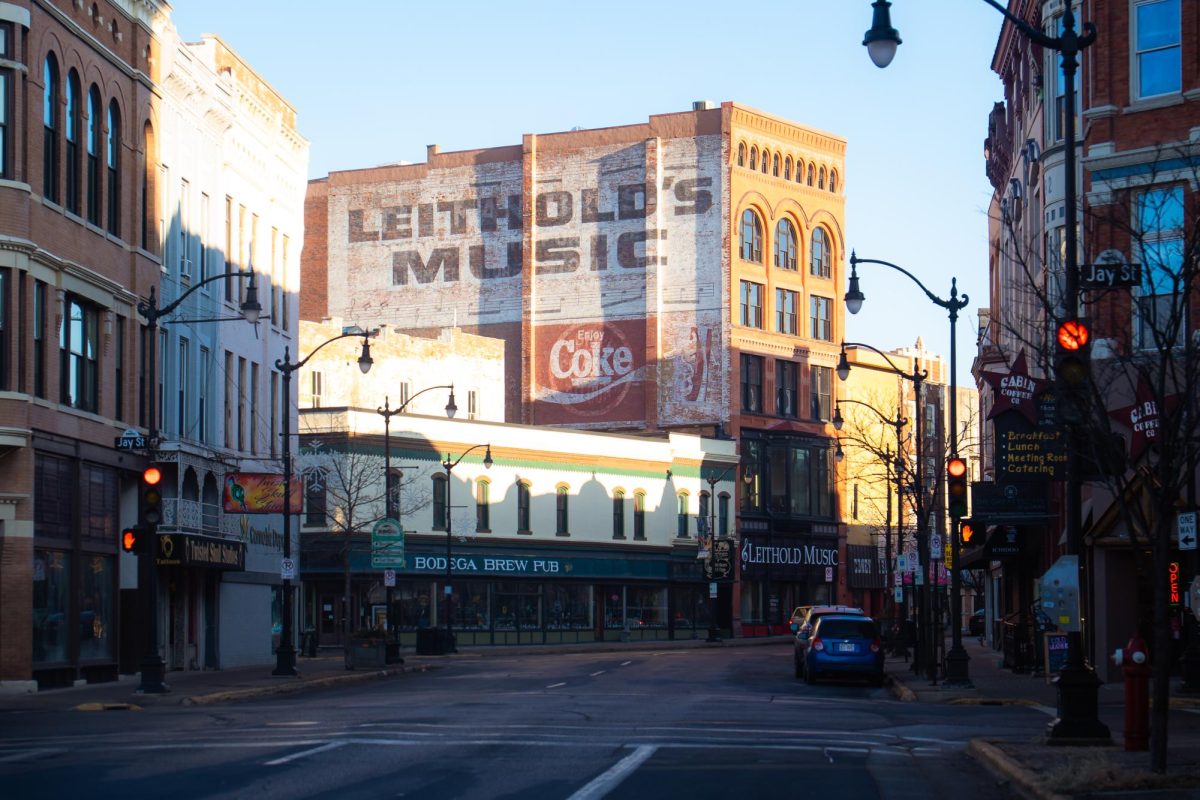
Throughout the streets and alleys of downtown La Crosse lie visual stories for all to view.
Some murals show the history of old business advertising from the past era, with faded colors that still show through for locals to see. Others shine with bright and bold contrasts that light up the side of storefronts and buildings. From old to new, murals have played a key role in the identity of La Crosse as a city.
The public murals of La Crosse have undergone changes over the years. Originally, the brick walls of buildings were painted for advertisements. Now referred to as ‘ghost signs’, in their prime they promoted music stores and soda companies. Today, those old advertisements sit alongside new works that represent the community.
Michael Zernia, known locally as Unicycle Michael, said that newer murals give local creatives a visible presence in shaping downtown.
“It’s almost like a cameo for artists because many of those same people are tattoo artists, muralists, or do their own art in a different context,” Zernia said.
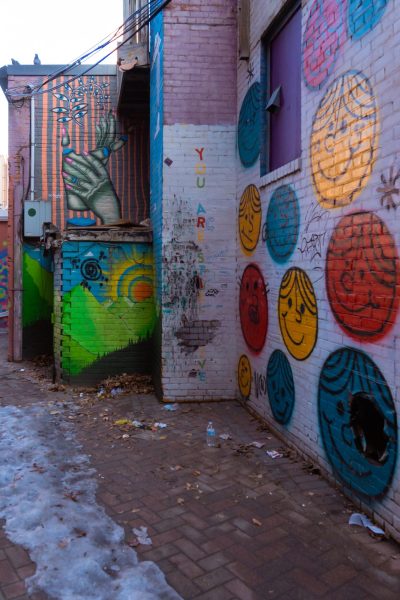
Small, nearby artists have found a way to contribute to the visual identity of La Crosse. At 118 Fifth Ave. S. downtown, people collaborate on filling the brick walls with vibrant scenes. These pieces may be hidden to visitors, but to the community, it has become a space where ideas and inspiration flow.
“There is something very tangible about the pieces in the art alley,” Zernia said. “You can walk right up to them.”
Public art has long been used in cities to represent communities and energize shared spaces. In La Crosse, both its history and culture are reflected in these public displays. One downtown mural, Confluence, located near the Pump House Regional Arts Center, depicts iconic figures and a riverboat, honoring the city’s early settlers and its connection to the Mississippi River.
Jacqueline Marcou, city of La Crosse arts coordinator, said murals like Confluence help visually connect residents to the city’s heritage.
“I think it’s important that we honor the roots before us, whose land we are living on,” Marcou said. “Honoring the past, present and future artists in our community is important.”
The more modern phase of murals began around 2017, when city-supported projects started popping up on downtown buildings. Marcou said one of the first murals funded through the city was the “Helping Hands” mural on a downtown parking ramp.
Since then, the city has created an arts grant program, which allows artists to apply for funding through a formal vetting process. Projects are now supported through a mix of city funds, private partnerships, and community collaboration.
“I think it brings new energy,” Marcou said. “When visitors come, it says we support our artists. We support the arts here.”
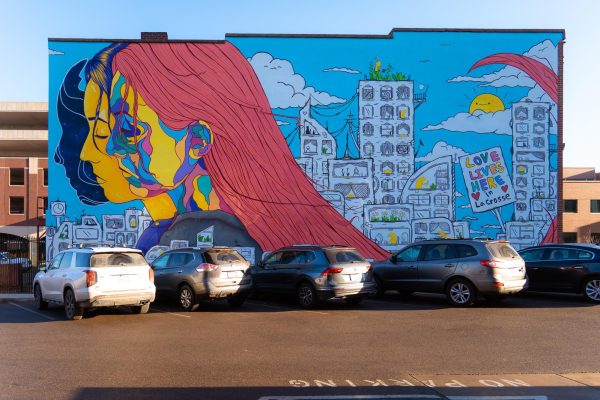
One of the newest murals reads, “Love Lives Here in La Crosse,” which stands out for its bold design and vivid imagery. Though simple, it reflects a sentiment that everyone can back and support.
Marcou said these message-driven murals allow the city to express not only its history, but its ever-changing identity.
“I think it makes people feel connected to where they are,” Marcou said. “If you’re walking down the street and you look up and feel something when you see that wall, we did our job.”
These large public displays are different from artwork inside galleries. They are visible to the entire community, without set hours or admission fees.
That accessibility may be part of why murals continue to grow. As more buildings welcome large public pieces, it allows the history and personal expression of its citizens to be revealed.